How to Price Photography Packages Without Second-Guessing Yourself
If you have ever sent a photography quote and immediately wanted to explain, apologise and offer a discount, I know the feeling.

11:47pm: the quote is typed, and nobody is pressing send…
Picture this. It's 11:47pm, and you have typed a price, deleted it and typed it again, because that number came from vibes and not from your costs. I do this dance more than I'd like to admit, and I run The First Studios.
Short answer: price a package from your costs, not your competitors. Value your labour by the hour, including editing and admin, add direct costs like travel and second shooters, add a share of monthly overheads, then add profit. Offer a few clear choices and do not discount just because someone asks.
You stare at the number. The number stares back.
Somewhere, you're sure, they already have a tab open called “photographers who are cheaper and probably nicer”.
So you add a little paragraph explaining yourself. Then a small discount. Then an apology for the discount.

Abeg. Instagram is not your accountant.
Run the numbers before you send the quote.
Use the free photography pricing calculator to include editing, costs and a profit margin. Your best guess is not a business model.
Open the pricing calculator →How many hours does a photography job really take?
So let me tell you how a wedding usually goes. Ten hours on the day. Lovely. That's the bit everyone sees.
Then the invisible bits queue up: the enquiry, the call, the planning, the backups, the culling, the editing, the emails…
Take a made up booking. Eight hours shooting, ten editing, two planning, two travelling, one delivering.
Twenty three hours.
And that's before insurance, tax, kit wear, and replacing whatever just met a tiled floor.

If you only pay yourself while holding the camera, editing becomes unpaid community service. Lovely for the community. Terrible for your rent.
List every hour the job will take, every direct cost, your share of overhead and the profit you need. Then describe the package in one paragraph your client can understand without phoning a friend.
How do you build a price from your costs?
Now, the boring maths. I promise it's short. Your hours, at an hourly value you could say out loud without coughing. Add direct costs like travel and second shooters. Add a slice of the monthly overheads. Then add the bit we always forget.
Profit.
Revenue is what comes in. Profit is what's left after the business has finished eating.
HMRC taxes your profit after allowable expenses, not your revenue, which is the one bit of tax news that sounds kind. Then the plot twist: once turnover passes £90,000 in any rolling 12 months, every quote needs 20% VAT on top. The VAT threshold checker tells you how close you are before HMRC does.
Say a job costs you £600 in labour and direct costs. You charge £650 and walk around feeling like Dangote.
Then the insurance renewal lands. Then your laptop retires and becomes a decorative object.

A private worksheet fixes this. Then the quote is a decision, not a mood.
Seven tiers later, the client closed the tab…
At The First Studios, a half day enquiry should not get a proposal that reads like the next season of a documentary series. So I keep it to shorter coverage, full day, and photo and video. Each one says the hours, what the client receives, whether another photographer comes and how extra time is priced.
Seven tiers sounds generous. It isn't.
It's a menu that needs a spreadsheet and emotional support to order from. The client says they'll “think about it”, and thinking about it is where bookings go to retire.
Three clear options. That's the whole trick.
Then they asked, so nicely, for a little discount…
Then the reply lands. “Love your work! Is there any flexibility on price?” Your thumb is already halfway to typing “of course”.
Budget talks are normal, and people have real limits. But when someone has less to spend, the scope changes, not the price: fewer hours, one less extra, a smaller set of deliverables.
Same work for less money isn't flexibility. It's sponsorship.

You don't even have to answer on the spot. “Let me see what I can adjust within that budget” is a grown up sentence. No apology for your existence required.
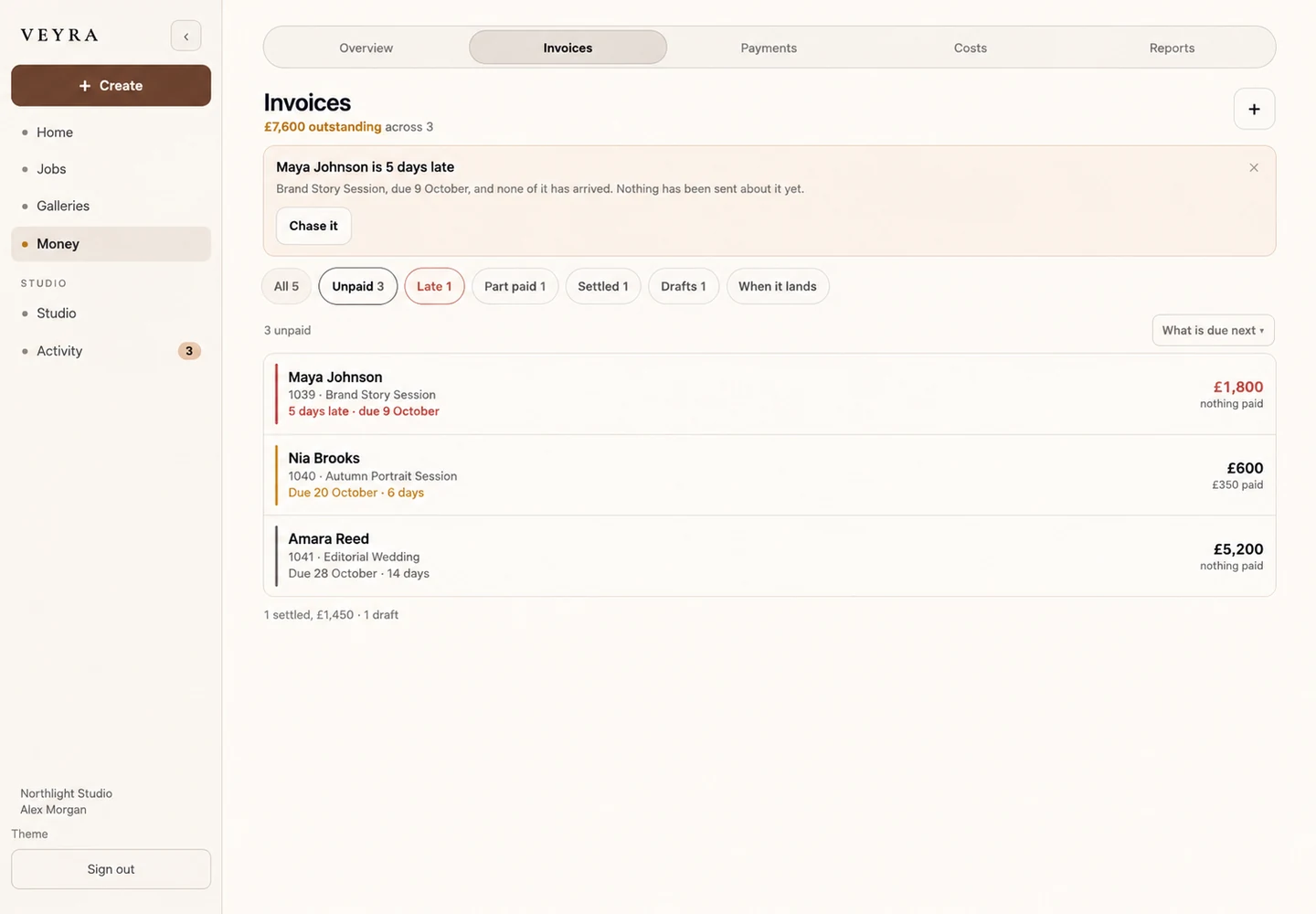
They said yes. Now where is the PDF with the new amount…
Anyway. They said yes. Wonderful. Now the booking has to move from quote to invoice to payment to project, without you digging for the PDF with the updated amount at midnight.
That digging is half the reason I build Veyra.
The point of all this pricing was never to be the most expensive person in the room. It's to still be doing excellent work next year.
And, ideally, to buy a new hard drive before the old one starts making suspicious noises.
Discussion
Thoughts, questions or something you would add?