What to Include in a Photography Client Welcome Guide
A client welcome guide is just excellent communication dressed nicely enough to arrive before the panic.
The client says “all good!” Meanwhile, inside their head…
So, a client books a portrait. The questions they never ask are the ones keeping them up at night, and a welcome guide exists to answer those first. Their email comes back “Perfect, see you then! x”, and it all looks very calm.
Short answer: a photography client welcome guide should open with a genuine welcome, tell clients what to do before the shoot, explain the awkward topics (payments, timings, changes) before they become awkward, and give a timeline they can picture. Send it as part of your booking workflow.
That x is lying.
Behind it is a person who has opened their wardrobe four times. Is green a photography colour? And the big one nobody answers: what do I do with my hands?
At The First Studios, the hands question is undefeated.

So they ask one email at a time. Wednesday, parking. Thursday, outfits. Saturday at 10pm, “sorry, one more thing”.
Your inbox becomes a very slow FAQ page.
Page one: say hello before the small print…
So the guide opens with a real hello. Thank them, mention what they booked, say you're looking forward to it.
Not an Oscars speech.
And please, not “Dear Valued Customer #047”. That's how banks talk to you right before they freeze your card.
Then the basics: date, location, timings, contacts, next steps. Check them against the real project, because copy and paste is a beautiful liar.
One lazy template and the reply comes back: “Lovely! Quick question: whose wedding is this?”

“Hi! I'm so glad we're working together. Here's everything you need to know before the shoot, from timings and preparation to what happens afterwards. If there's anything you're unsure about, just ask.”
What should clients do before the shoot?
Portraits: clothing ideas, arrival and parking, outfit changes, what to bring. Weddings: a simple timeline, the family group list, venue access and any restrictions. Property: how to prepare the rooms and when the space has to be ready.
Notice what's missing: the 28 page masterpiece about every shoot you offer. A wedding couple does not need four pages on staging a kitchen.
And say what happens if it rains. Nobody wants to discover your rain policy while standing in it, bouquet over their head.
That is not a client experience.
That is improv with an umbrella.

Then the awkward bits, before they get awkward…
Start times, overtime, editing style, turnaround, image selection, delivery format, payment milestones, changes and which revisions cost extra. None of it is exciting. All of it becomes an awkward email thread if you leave it out.
Copyright too. In the UK the photographer usually owns it unless you agree otherwise in writing (GOV.UK: ownership of copyright works), so say what the client can do with the images. Before one appears on a bus.
Use real numbers. Send the guide about 2 weeks before the shoot, and promise a turnaround you can keep, like a sneak peek within 3 days and the full gallery within 6 weeks.
Most client stress isn't hard questions. It's easy questions answered late.
Give them one way to reach you. Four numbers, three emails and “DM me anywhere” is how messages go to live on a farm.
When will clients get their photographs?
People understand dates. They do not understand “soon”.
Soon is not a date. Soon is a mood.
So lay it out: booking confirmed, questionnaire, final check in, shoot day, editing, gallery. Use your real turnaround, not the one from the dream where you never sleep.
A reminder the day before with the address and time saves a lot of “we're in the wrong car park” calls.
My favourite measure: how few surprises are left on the day.
Ideally none. Except the good ones.
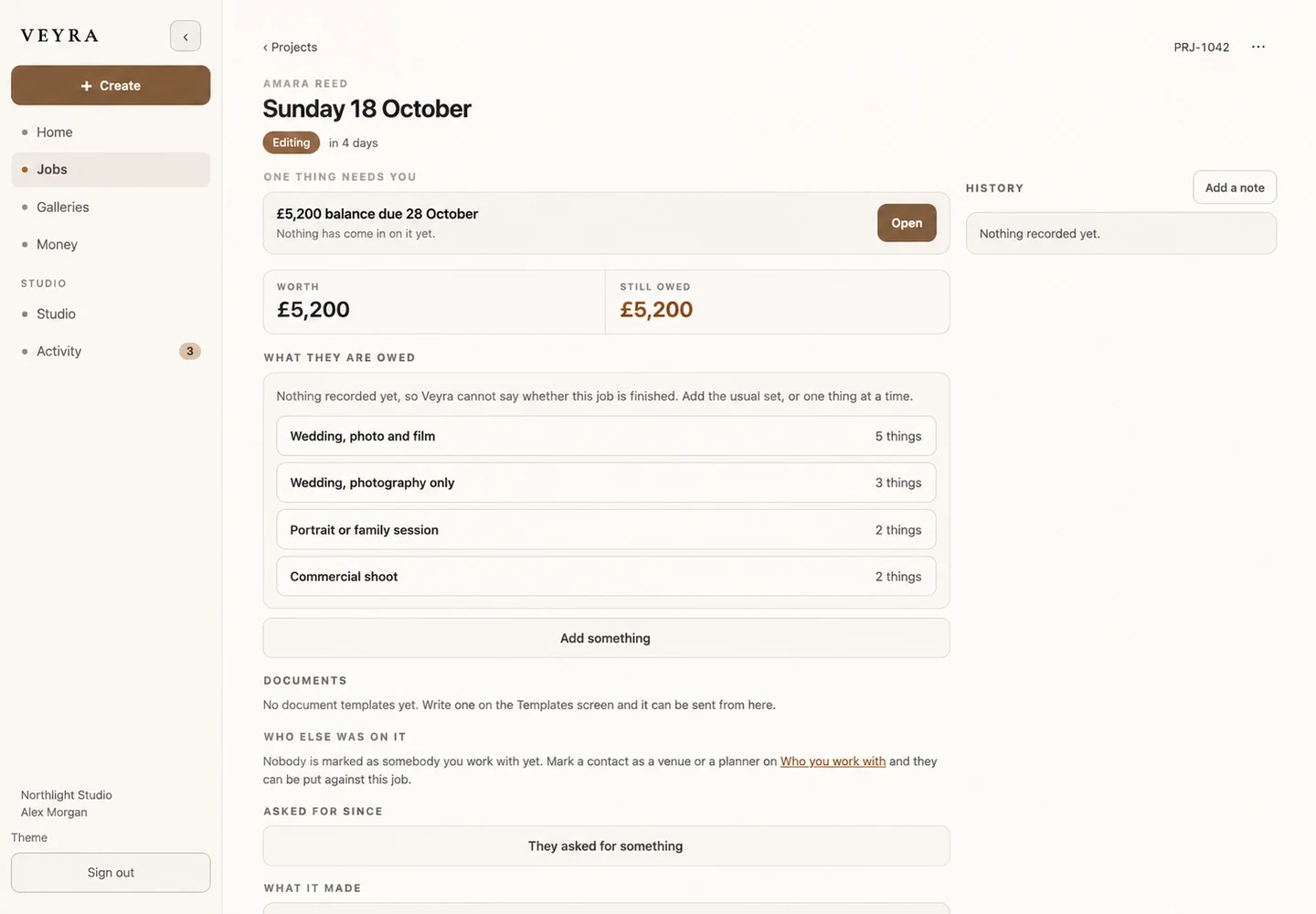
And then, obviously, you lose the guide…
Anyway. You send this lovely guide, and weeks later the client asks, “Didn't you say we'd get prints before the party?”
Did you say that? You don't know. You go digging through an email chain called “Re: Re: Re: Thanks” like a detective in a series with no budget.

So build one template, personalise it, and file the final version with the project.
That's the bigger idea in Veyra: contacts, projects, invoices and delivery together, not lost in a downloads folder.
End with one clear step: “If anything is on your mind before the day, reply here. I'd rather answer a question now than have you worry about it later.”
Then let them ask about the hands.
Discussion
Thoughts, questions or something you would add?